BASBOUSA
BASBOUSA
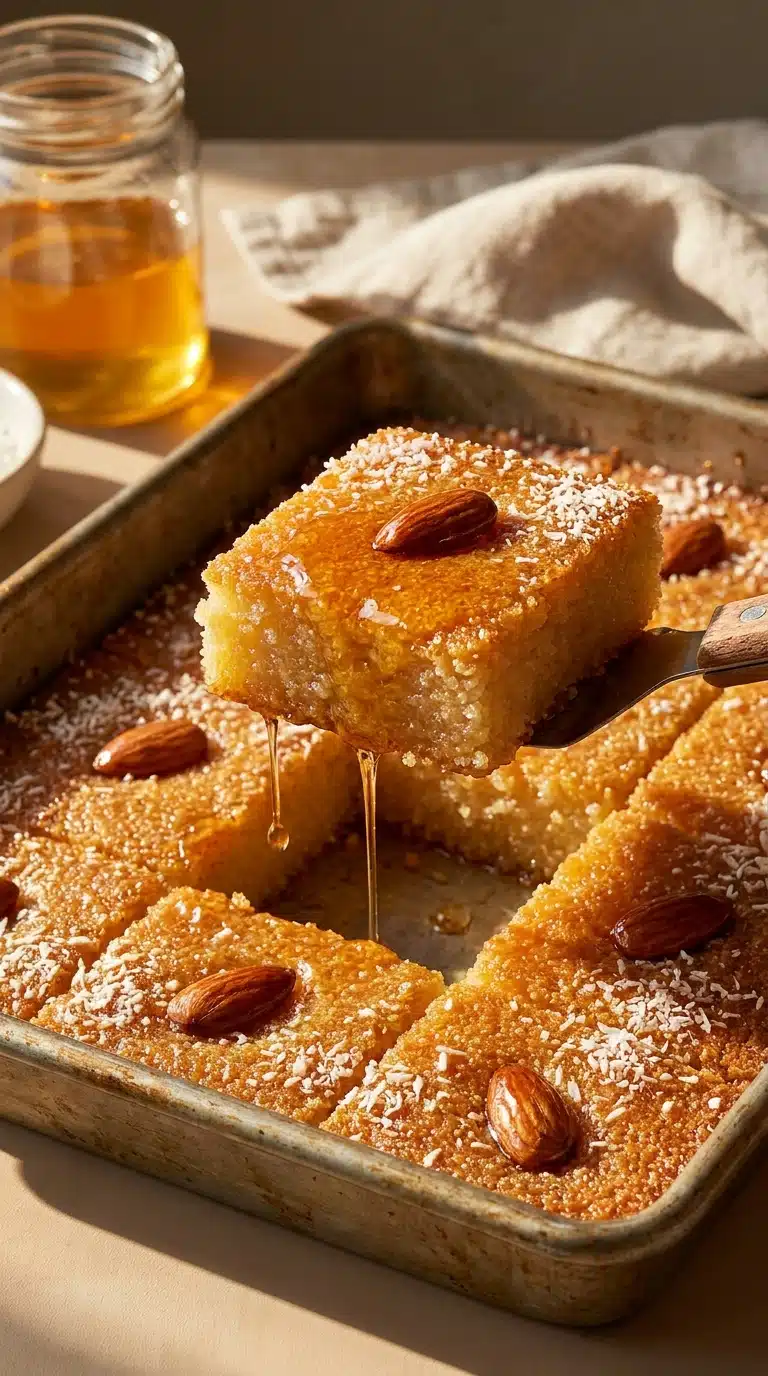
BASBOUSA welcomes you with its intoxicating aroma of butter and rose water the moment it emerges from the oven. This golden semolina cake carries centuries of tradition in every syrup-soaked crumb. The texture is simultaneously dense and delicate, with a satisfying crunch from whole almonds crowning each diamond-shaped piece.
The Golden Appeal of BASBOUSA
There’s something magical about a dessert that transforms simple pantry staples into a luxurious treat. BASBOUSA achieves this alchemy through the unique properties of semolina, which creates a texture unlike standard flour-based cakes. The shredded coconut adds subtle sweetness and texture, while the scented syrup penetrates every grain for moist, fragrant bites.
BASBOUSA Through the Ages
This beloved dessert traces its roots across the Middle East and North Africa, with each region adding its own signature touch. Known as namoura in Lebanon and revani in Turkey, BASBOUSA connects generations through shared culinary heritage. The tradition of soaking cakes in scented syrup dates back centuries, creating a distinct category of desserts that celebrate the region’s love for floral waters and nuts. Learn more about the history of this dessert.
Why You’ll Love Making BASBOUSA
Versatile: BASBOUSA adapts beautifully to different occasions, from casual family dinners to elaborate holiday spreads.
Budget-Friendly: Made with affordable staples like semolina and yogurt, this dessert proves that luxury does not require expensive ingredients.
Quick and Easy: The batter comes together in minutes without fancy equipment or techniques.
Customizable: You can adjust the syrup sweetness or swap the rose water for other floral extracts.
Crowd-Pleasing: The combination of sweet syrup and nutty semolina appeals to both children and adults.
Make-Ahead Friendly: BASBOUSA tastes even better the next day as the flavors meld and the syrup fully penetrates the cake.
Great for Leftovers: Store covered at room temperature for several days without losing moisture or texture.
Pro Tips for Perfect BASBOUSA Every Time
Achieving the ideal texture requires attention to a few key details. The syrup must be hot when it meets the hot cake, creating the signature absorption that defines authentic BASBOUSA. Serious Eats offers excellent guidance on syrup techniques.
Use fine semolina rather than coarse for the traditional tender crumb. Do not overmix the batter once the liquids join the dry ingredients, as this develops gluten and creates toughness. Score the batter deeply before baking so the pieces separate easily after soaking.
What You Need to Make BASBOUSA
Baking Dish: A 9×13 inch pan works perfectly for this recipe, providing the ideal thickness for even cooking.
Mixing Bowls: You will need one large bowl for the batter and a medium saucepan for the syrup.
Sharp Knife: Essential for scoring the diamond pattern before baking and cutting clean pieces after soaking.
Measuring Cups and Spoons: Accurate measurements ensure the proper balance between dry and wet ingredients.
Your BASBOUSA Ingredient Lineup
Gather these simple components to create something truly special. Each ingredient plays a crucial role in building the texture and flavor profile that makes BASBOUSA irresistible.
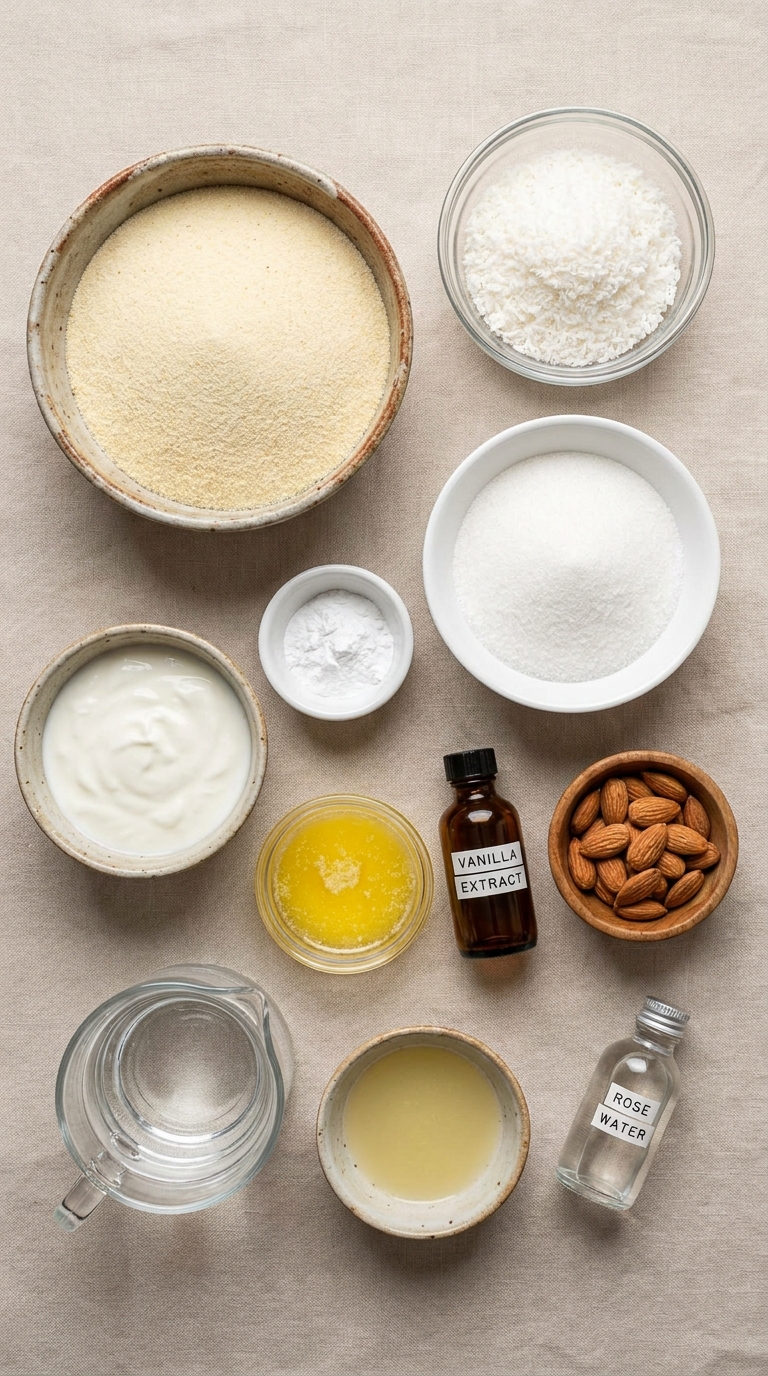
- Fine Semolina: 2 cups, providing the signature grainy texture and golden color that defines BASBOUSA.
- Shredded Coconut: 1 cup, adding subtle sweetness and pleasant chewiness throughout the cake.
- Granulated Sugar: ¾ cup for the cake batter, contributing to the tender crumb and caramelized crust.
- Baking Powder: 1 teaspoon, giving the cake a slight lift and preventing excessive density.
- Plain Yogurt: 1 cup, adding moisture and tang while activating the baking powder for proper rise.
- Melted Butter: ½ cup, creating richness and helping the cake develop its characteristic golden exterior.
- Vanilla Extract: 1 teaspoon, providing warm aromatic depth that complements the floral syrup.
- Whole Almonds: Several pieces for topping, adding visual appeal and a satisfying crunch contrast.
- Sugar: 1½ cups for the syrup, creating the glossy sweet coating that defines the dessert.
- Water: 1 cup, dissolving the sugar to create the proper consistency for soaking.
- Lemon Juice: 1 tablespoon, preventing crystallization and adding subtle brightness to balance sweetness.
- Rose Water: 1 teaspoon optional, infusing the syrup with traditional floral fragrance.
BASBOUSA Substitutions Guide
Fine Semolina: Coarse semolina can work in a pinch, though the texture will be grainier. Cream of wheat provides a similar but softer result.
Shredded Coconut: Desiccated coconut works well, or you can reduce the amount if you prefer less texture.
Plain Yogurt: Greek yogurt thinned with a little milk, sour cream, or buttermilk all provide similar acidity and moisture.
Rose Water: Orange blossom water offers a different but equally traditional floral note, or use additional vanilla extract.
Whole Almonds: Blanched hazelnuts, pistachios, or even pine nuts create beautiful variations while maintaining the traditional look.
The Stars of BASBOUSA
Fine Semolina: This durum wheat product creates the distinctive crumb that sets BASBOUSA apart from other cakes. Unlike all-purpose flour, semolina absorbs syrup while maintaining structural integrity, creating the moist yet sliceable texture devotees crave.
Rose Water: Distilled from rose petals, this optional but traditional ingredient elevates the syrup from simple sweet to complex and aromatic. A little goes a long way, adding an elegant perfume that transports you to Middle Eastern patisseries with every bite.
How to Make BASBOUSA Step by Step
Follow these precise instructions to achieve authentic results. The process moves quickly, so having your ingredients measured and ready makes the experience smooth and enjoyable.
- Preheat oven to 350°F (175°C) and grease a baking dish. This temperature ensures the cake cooks through while developing a golden crust without burning.
- Mix semolina, coconut, sugar, and baking powder in a bowl. Whisk thoroughly to distribute the leavening evenly and break up any coconut clumps.
- Add yogurt, melted butter, and vanilla; mix into a thick batter. Stir just until combined to avoid developing gluten, which would make the cake tough rather than tender.
- Spread evenly in the dish and score into diamond shapes. Use a sharp knife dipped in water to prevent sticking, cutting about halfway through the batter.
- Press one almond into the center of each piece. Push firmly so the nuts embed slightly, ensuring they stay in place during baking.
- Bake 25–30 min until golden. The edges should pull slightly from the pan and the top should spring back when gently pressed.
- Meanwhile, simmer sugar, water, and lemon juice for the syrup until slightly thickened; stir in rose water. The syrup should coat a spoon lightly but remain pourable, as it thickens further upon cooling.
- Pour warm syrup over the hot cake immediately after baking. Let it soak and cool before serving. The heat helps the syrup absorb fully, creating the characteristic moist texture.
Common BASBOUSA Pitfalls to Avoid
- Pouring cold syrup on cold cake: Always apply warm syrup to the hot cake straight from the oven. Cold temperatures prevent proper absorption, leaving you with dry cake and pooled syrup.
- Undercooking the base: If the center remains pale or soft, continue baking until fully set. An underbaked center becomes gummy rather than pleasantly moist when syrup is added.
- Skipping the scoring: Cutting after baking shatters the delicate crust and creates ragged pieces. Score before baking for clean, beautiful diamonds.
- Using coarse semolina: While possible, coarse semolina creates a grittier texture that some find unpleasant. Fine semolina produces the traditional tender crumb.
BASBOUSA Nutrition Facts
Servings: 12 generous pieces
Calories per serving: approximately 280
Note: These are approximate values based on standard ingredient calculations and may vary depending on specific brands and portion sizes.
BASBOUSA Timing Breakdown
Prep Time: 15 minutes
Cook Time: 30 minutes
Total Time: 45 minutes plus cooling time
Creative BASBOUSA Twists to Try
Orange Blossom BASBOUSA: Replace the rose water with orange blossom water and add a teaspoon of orange zest to the batter for a citrusy aromatic profile.
Coconut-Forward Version: Increase the shredded coconut to 1½ cups and reduce the semolina accordingly for a chewier, more tropical texture.
Nutty Crust: Press chopped pistachios or walnuts into the top before baking instead of whole almonds for a different crunch and beautiful green color contrast.
Chocolate Drizzle: Once cooled, drizzle melted dark chocolate over the traditional diamond pattern for a modern fusion twist that chocolate lovers adore.
Cardamom Spice: Add ½ teaspoon of ground cardamom to the dry ingredients for a warm, spicy note that complements the rose water beautifully.
FAQ’s
1. What exactly is BASBOUSA?
BASBOUSA is a traditional Middle Eastern semolina cake soaked in sweet syrup. It features a distinctive grainy yet moist texture from semolina flour, often topped with nuts and scented with rose or orange blossom water.
2. Can I make BASBOUSA without coconut?
Yes, though the texture will be slightly different. You can substitute the coconut with additional fine semolina or ground almonds, but the classic version includes coconut for authentic flavor and chew.
3. Why is my BASBOUSA too dry?
Dryness usually results from syrup that was not absorbed properly. Ensure both the cake and syrup are hot when combined, and allow sufficient soaking time. Also check that you used plain yogurt, as low-fat versions produce drier results.
4. How should I store leftover BASBOUSA?
Cover tightly and store at room temperature for up to three days. The syrup preserves the moisture, so refrigeration is unnecessary and can actually harden the butter in the cake.
5. Can I freeze BASBOUSA?
Freezing is possible but not ideal, as the syrup can crystallize and separate upon thawing. If you must freeze, wrap individual pieces well and thaw at room temperature, though fresh is always superior.
6. Is BASBOUSA vegan?
Traditional BASBOUSA contains dairy from yogurt and butter. You can substitute coconut oil for butter and use coconut yogurt to create a vegan version, though the flavor profile will shift slightly.
7. Why did my almonds fall off during baking?
Press the almonds firmly into the batter before baking, ensuring they sit below the surface level. You can also place them after the cake has baked for 10 minutes, when the surface has set slightly but is still soft.
8. Can I reduce the sugar in the syrup?
You can reduce the sugar slightly, but the syrup provides the characteristic moisture and sweetness. Reducing it too much results in a dry cake. Try using 1¼ cups sugar instead of 1½ cups if you prefer less sweetness.
9. What is the best pan size for BASBOUSA?
A 9×13 inch rectangular pan or a 10-inch round pan works well. The batter should be about ½ to ¾ inch thick for proper cooking. Too thin dries out, while too thick leaves the center undercooked.
10. Can I make BASBOUSA ahead of time?
Absolutely. BASBOUSA improves over the first 24 hours as the syrup fully penetrates the crumb. Make it a day ahead, cover well, and serve at room temperature for the best flavor and texture.
Conclusion
BASBOUSA represents the beautiful simplicity of Middle Eastern dessert traditions, where humble ingredients become something extraordinary through technique and care. The combination of golden semolina, fragrant syrup, and crunchy almonds creates a sensory experience that lingers in memory long after the last bite. Whether you serve it for a special celebration or a quiet afternoon treat, this cake brings warmth and sweetness to any moment. Trust me, once you master this recipe, it will become a permanent fixture in your baking repertoire, worth every moment of preparation.
PrintBASBOUSA
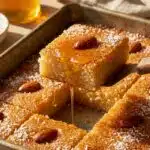
BASBOUSA welcomes you with its intoxicating aroma of butter and rose water the moment it emerges from the oven. This golden semolina cake carries centuries of tradition in every syrup-soaked crumb.
- Prep Time: 15 minutes
- Cook Time: 30 minutes
- Total Time: 45 minutes plus cooling
- Yield: 12 servings
- Category: Dessert
- Method: Baking
- Cuisine: Middle Eastern
- Diet: Vegetarian
Ingredients
- Cake
- 2 cups fine semolina
- 1 cup shredded coconut
- ¾ cup granulated sugar
- 1 tsp baking powder
- 1 cup plain yogurt
- ½ cup melted butter
- 1 tsp vanilla extract
- Whole almonds, for topping
- Syrup
- 1½ cups sugar
- 1 cup water
- 1 tbsp lemon juice
- 1 tsp rose water (optional)
Instructions
- Preheat oven to 350°F (175°C) and grease a baking dish.
- Mix semolina, coconut, sugar, and baking powder in a bowl.
- Add yogurt, melted butter, and vanilla; mix into a thick batter.
- Spread evenly in the dish and score into diamond shapes.
- Press one almond into the center of each piece.
- Bake 25–30 min until golden.
- Meanwhile, simmer sugar, water, and lemon juice for the syrup until slightly thickened; stir in rose water.
- Pour warm syrup over the hot cake immediately after baking. Let it soak and cool before serving.
Notes
- Use fine semolina rather than coarse for the traditional tender crumb.
- Do not overmix the batter once liquids join dry ingredients.
- Score batter deeply before baking so pieces separate easily after soaking.
- Ensure syrup is hot when poured over hot cake for proper absorption.
Nutrition
- Serving Size: 1 piece
- Calories: 280