
Scotch Eggs
Crunchy on the outside, savory in the middle, and with a golden, jammy egg hiding at the heart, Scotch Eggs are a true culinary delight. Whether served warm or cold, these crispy sausage-coated eggs are a hearty, handheld meal that never fails to impress. They’re picnic-ready, brunch-approved, and completely satisfying.
Behind the Recipe
The first time I made Scotch Eggs, it felt like wrapping a surprise inside a delicious mystery. I remember biting into one warm from the pan — the crisp coating gave way to flavorful sausage and finally, that rich, soft-centered egg. It was like eating a breakfast sandwich turned inside out. Since then, I’ve made them for picnics, packed lunches, and even as appetizers for dinner parties. They’re always a hit, and let me tell you, they’re worth every crunchy bite.
Recipe Origin or Trivia
Despite the name, Scotch Eggs aren’t actually from Scotland. They’re believed to have originated in London in the 1700s, popularized by the famous Fortnum & Mason department store. Some say they were inspired by Indian koftas or even earlier French meat-wrapped eggs. Whatever the origin, today they’re a staple in British cuisine, loved across pubs, markets, and home kitchens alike.
Why You’ll Love Scotch Eggs
There’s something irresistible about this comforting classic — especially when you crack through the crust and discover that soft egg surprise inside.
Versatile: Perfect as a snack, breakfast, lunch, or pub-style dinner.
Budget-Friendly: Uses simple ingredients that pack big flavor.
Quick and Easy: Once you get the method down, it’s smooth sailing.
Customizable: Use different meats, add spices, or make it vegetarian.
Crowd-Pleasing: Serve them sliced at parties or whole at picnics.
Make-Ahead Friendly: Prepare and refrigerate or freeze before frying.
Great for Leftovers: Delicious cold or reheated in the oven.
Chef’s Pro Tips for Perfect Results
Here’s how to nail Scotch Eggs every time — crispy outside, creamy yolk inside:
- Use soft- or medium-boiled eggs: Boil them just enough so the yolk stays golden and jammy.
- Chill the boiled eggs before wrapping: This helps keep the yolk intact and prevents overcooking when frying.
- Wet your hands: It makes wrapping the sausage meat around the egg much easier and less sticky.
- Double-coat for crunch: Dip in flour, egg wash, and breadcrumbs — and repeat the egg and breadcrumb steps for an extra crispy shell.
- Oil temperature matters: Keep oil at 350°F (175°C) for even browning without burning the outside.
Kitchen Tools You’ll Need
No fancy gear required — just some kitchen basics.
Saucepan: For boiling the eggs.
Mixing Bowl: For combining sausage and seasonings.
Slotted Spoon: To remove eggs from boiling water.
Shallow Bowls: For flour, egg wash, and breadcrumbs.
Deep Fryer or Heavy Pot: For frying the Scotch Eggs.
Thermometer (optional): To monitor oil temperature.
Ingredients in Scotch Eggs
These simple ingredients come together to create layers of flavor and texture.
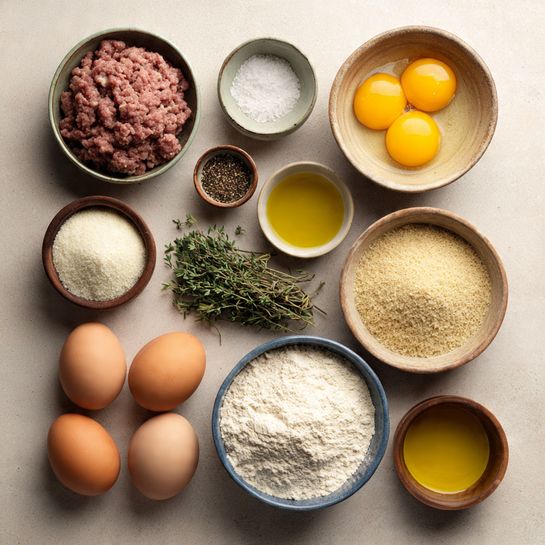
- Large Eggs: 6 – Boiled and used as the center of each Scotch egg.
- Salt: 1 teaspoon – Enhances all the flavors in the sausage.
- Black Pepper: 1/2 teaspoon – Adds a bit of warmth.
- Dried Thyme: 1 teaspoon – Gives an herby note to the sausage.
- All-Purpose Flour: 1/2 cup – Helps the coating stick.
- Beaten Egg: 2 – Used for dredging before breadcrumbs.
- Breadcrumbs (panko or regular): 1 cup – For that signature crispy crust.
- Vegetable Oil: For deep frying – Neutral oil works best for even frying.
Ingredient Substitutions
Need to switch things up? Try these alternatives:
Breadcrumbs: Crushed crackers or cornflakes can be used.
Dried Thyme: Try rosemary, parsley, or Italian seasoning.
Vegetable Oil: Use canola or sunflower oil.
All-Purpose Flour: Substitute with gluten-free flour if needed.
Ingredient Spotlight
Panko Breadcrumbs: These Japanese-style breadcrumbs are light and airy, creating the crispiest crust for Scotch Eggs. They brown evenly and stay crunchy longer than regular breadcrumbs.
Sausage Meat: Choose a well-seasoned sausage or add your own spices to bring out the full savory flavor. A good sausage is what gives Scotch Eggs their meaty heart.
Instructions for Making Scotch Eggs
Let’s get wrapping and frying — here’s how to build these beautiful handheld bites:
- Preheat Your Equipment:
No oven needed unless reheating. Set up a deep pot with oil and heat to 350°F (175°C). - Combine Ingredients:
In a bowl, mix ground sausage with salt, pepper, and thyme until well blended. - Prepare Your Cooking Vessel:
Boil 6 eggs for 6–7 minutes (for soft centers). Transfer to ice water to stop cooking. Once cool, peel gently. - Assemble the Dish:
Divide sausage into 6 equal portions. Flatten each into a patty, then wrap around each peeled egg, sealing completely. - Cook to Perfection:
Dredge each sausage-wrapped egg in flour, dip in beaten egg, then coat in breadcrumbs. For extra crunch, dip again in egg and breadcrumbs. Deep fry in hot oil for 5–6 minutes until golden brown and cooked through. - Finishing Touches:
Remove and drain on paper towels. Let cool slightly for clean slicing. - Serve and Enjoy:
Serve warm with mustard, pickles, or a side salad — or enjoy cold from the fridge.
Texture & Flavor Secrets
These eggs are all about contrast — a crispy golden shell gives way to juicy sausage, followed by a tender egg white and creamy yolk. The sausage is herby and peppery, while the yolk adds richness. Frying seals in all the flavor while creating a satisfying crunch in every bite.
Cooking Tips & Tricks
Master the method with these final tips:
- Cook the eggs just under to avoid overcooking after frying.
- Wrap sausage evenly for consistent cooking.
- Test one egg first to adjust oil temperature and timing.
What to Avoid
Here’s what can go wrong — and how to stop it:
- Don’t overcook the yolks. Use a timer and ice bath.
- Avoid thin sausage layers, which can split during frying.
- Don’t overcrowd the pan — fry in batches for best results.
Nutrition Facts
Servings: 6
Calories per serving: 400
Note: These are approximate values.
Preparation Time
Prep Time: 25 minutes
Cook Time: 15 minutes
Total Time: 40 minutes
Make-Ahead and Storage Tips
You can prepare Scotch Eggs up to 2 days in advance. Keep them wrapped in foil or in an airtight container in the fridge. To reheat, warm in the oven at 350°F for 10 minutes. They can also be frozen after frying and reheated in the oven from frozen — just extend the cook time slightly.
How to Serve Scotch Eggs
Slice in half to reveal the golden center and serve with grainy mustard, pickled onions, or a simple green salad. Great for brunch buffets, lunchboxes, or as a protein-packed snack.
Creative Leftover Transformations
Don’t let leftovers go to waste — here’s how to reinvent them:
- Slice and add to breakfast sandwiches.
- Chop and fold into a salad with crispy croutons.
- Dice and serve over rice or noodles with sauce.
Additional Tips
- Use fresh, not frozen, sausage for easier wrapping.
- Chill wrapped eggs before frying to help them hold shape.
- Serve with a dipping sauce like sriracha mayo or aioli for extra flair.
Make It a Showstopper
Slice open a few to show off that gorgeous yolk. Stack on a wooden board with dips, herbs, and pickles for a rustic, pub-style presentation that’s sure to impress.
Variations to Try
- Spicy Scotch Eggs: Add chili flakes or hot sauce to the sausage.
- Vegetarian Scotch Eggs: Use plant-based sausage and soft-boiled eggs.
- Baked Scotch Eggs: Bake at 400°F for 25–30 minutes instead of frying.
- Cheesy Scotch Eggs: Mix grated cheese into the sausage for melty goodness.
- Mini Scotch Eggs: Use quail eggs for bite-sized party snacks.
FAQ’s
Q1: Can I make Scotch Eggs in an air fryer?
Yes, air fry at 375°F for 12–15 minutes, flipping halfway.
Q2: Can I use breadcrumbs without eggs?
You’ll still need egg wash to help the breadcrumbs stick.
Q3: Can I make them gluten-free?
Yes, use gluten-free flour and breadcrumbs.
Q4: How do I keep the yolk runny?
Boil for 6 minutes, then chill in ice water and don’t overfry.
Q5: What oil is best for frying?
Use a neutral oil like vegetable or canola with a high smoke point.
Q6: Can I bake instead of fry?
Yes, bake at 400°F for 25–30 minutes until golden and cooked through.
Q7: Do I need to pre-cook the sausage?
No, it cooks completely during frying.
Q8: How do I know when they’re done?
Use a meat thermometer — sausage should reach 160°F inside.
Q9: Are Scotch Eggs served hot or cold?
Both! They’re delicious warm but also great chilled from the fridge.
Conclusion
Scotch Eggs are the ultimate savory treat — bold, crunchy, meaty, and with a surprise inside. Whether you’re new to them or already a fan, this recipe brings all the goodness of a classic pub snack right to your kitchen. Trust me, once you make them, they’ll become a regular favorite.
PrintScotch Eggs
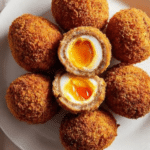
Crispy on the outside, savory in the middle, and with a soft golden egg center, these homemade Scotch Eggs are the ultimate pub-style snack or protein-packed lunch.
- Prep Time: 25 minutes
- Cook Time: 15 minutes
- Total Time: 40 minutes
- Yield: 6 scotch eggs
- Category: Dinner
- Method: Frying
- Cuisine: British
Ingredients
- 6 large eggs
- 1 teaspoon salt
- 1/2 teaspoon black pepper
- 1 teaspoon dried thyme
- 1/2 cup all-purpose flour
- 2 eggs, beaten (for dredging)
- 1 cup breadcrumbs (panko or regular)
- Vegetable oil, for frying
Instructions
- Boil 6 eggs for 6–7 minutes. Transfer to ice water, then peel once cool.
- In a bowl, mix ground sausage with salt, pepper, and thyme.
- Divide sausage into 6 parts. Flatten into patties and wrap around each peeled egg completely.
- Dredge each in flour, dip in beaten egg, then coat in breadcrumbs. For extra crunch, dip again in egg and breadcrumbs.
- Heat oil in a deep pot to 350°F (175°C). Fry eggs for 5–6 minutes until golden brown and cooked through.
- Remove and drain on paper towels. Let cool slightly before serving.
Notes
- Use medium-boiled eggs for creamy yolks that won’t overcook when fried.
- Wet hands when shaping sausage to avoid sticking.
- For a lighter option, bake at 400°F for 25–30 minutes instead of frying.
Nutrition
- Serving Size: 1 scotch egg
- Calories: 400
- Sugar: 1g
- Sodium: 620mg
- Fat: 28g
- Saturated Fat: 9g
- Unsaturated Fat: 17g
- Trans Fat: 0g
- Carbohydrates: 13g
- Fiber: 1g
- Protein: 22g
- Cholesterol: 240mg