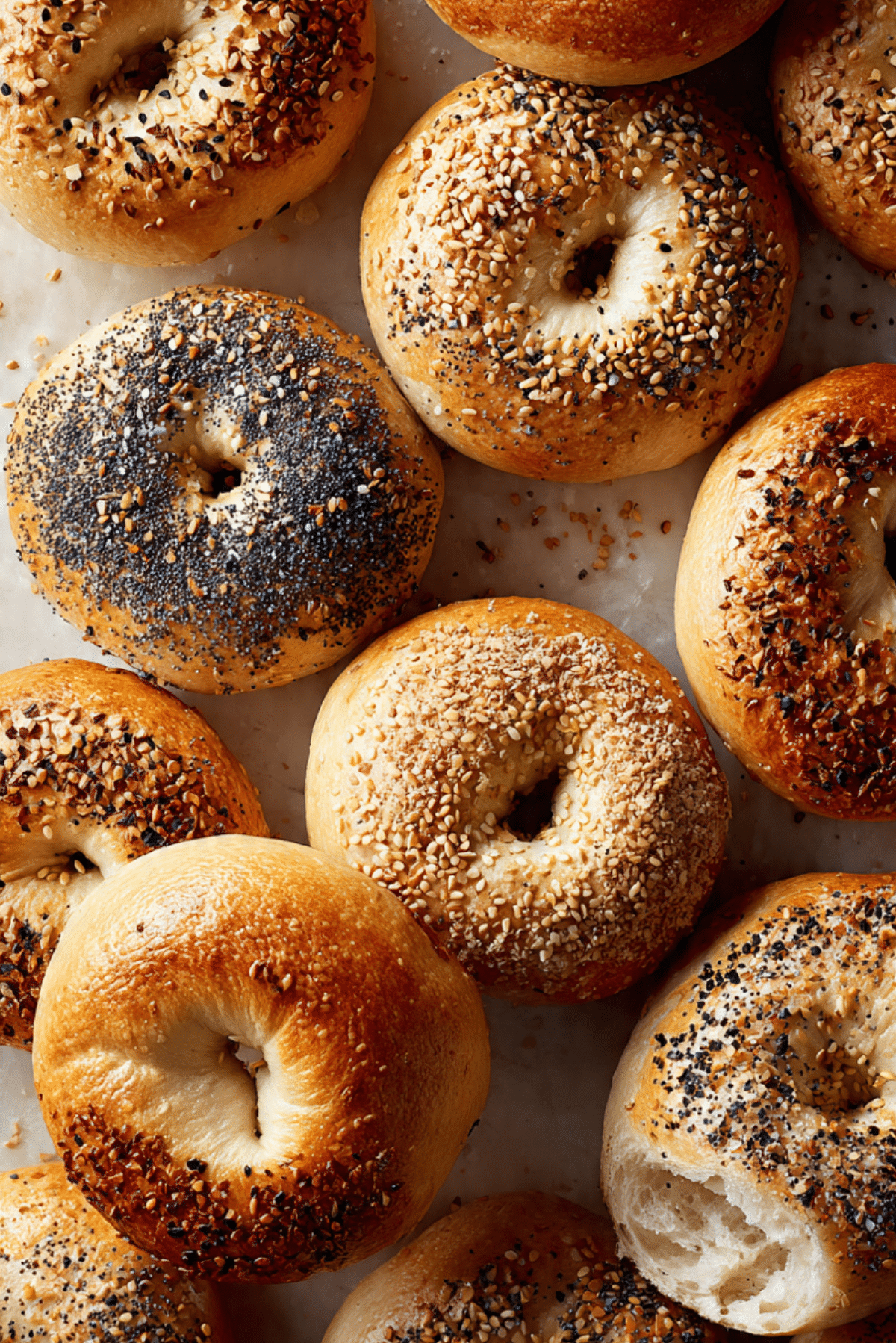
Homemade Bagels Recipe
There’s something so deeply satisfying about baking your own bagels. From the moment the dough comes together in your hands to the first chewy bite fresh out of the oven, it’s a kitchen ritual that fills your space with warmth, the scent of yeast and toasted seeds, and the undeniable joy of homemade goodness. This homemade bagel recipe brings that magic to your countertop with simple steps and bakery-style results that will have everyone asking for more.
Behind the Recipe
I first started experimenting with bagels when I couldn’t find a good one outside of New York. The store-bought versions just didn’t cut it — too fluffy, too soft, missing that signature chew. So I set out on a mission to recreate the kind of bagel that makes you pause after the first bite. After plenty of batches, tweaks, and weekend mornings spent with flour on my apron, this version became the winner. It hits all the right notes — golden crust, dense but soft interior, and a flavor that only gets better with your favorite toppings.
Recipe Origin or Trivia
Bagels have their roots in Eastern European Jewish communities, dating back to the 17th century in Poland. Traditionally given as gifts to new mothers, bagels were loved for their symbolic ring shape, representing the cycle of life. Brought to America by Jewish immigrants, they became a breakfast staple and deli essential. Their signature boiling step is what gives them that shiny crust and satisfying chew, setting them apart from ordinary bread rolls.
Why You’ll Love Homemade Bagels Recipe
Homemade bagels are more than just breakfast — they’re a weekend project that rewards you with real bakery flavor.
Versatile: Top them with anything — sesame, poppy, everything seasoning, cinnamon sugar, or leave them plain for cream cheese bliss.
Budget-Friendly: No need to splurge at the bakery. These cost pennies per bagel and taste ten times better.
Quick and Easy: With a little planning, you’ll have fresh bagels in just a few hours from start to finish.
Customizable: Choose your toppings, flavors, even fillings. Sweet or savory, it’s all up to you.
Crowd-Pleasing: Perfect for brunch, breakfast spreads, or gifting to friends.
Make-Ahead Friendly: Prepare the dough the night before and bake fresh in the morning.
Great for Leftovers: Toasted the next day? Still heavenly.
Chef’s Pro Tips for Perfect Results
Get that golden crust and chewy bite just right with these expert pointers:
- Boil before baking: This is non-negotiable. The quick water bath gives bagels their classic shine and dense texture.
- Use bread flour: Higher protein content equals more chew, which is exactly what you want in a bagel.
- Let the dough rest overnight: A cold proof in the fridge deepens flavor and improves texture.
- Don’t over-flour your surface: A little stickiness is good — too much flour and your dough won’t roll as smoothly.
- Top while wet: Add seeds and toppings right after boiling so they stick well.
Kitchen Tools You’ll Need
Bagels don’t require fancy tools, but these basics make the process smooth:
Large Mixing Bowl: For combining and kneading the dough.
Stand Mixer (optional): Makes kneading easier, but hands work just fine too.
Slotted Spoon: To lift bagels out of the boiling water.
Large Pot: For boiling the bagels before baking.
Baking Sheet: A sturdy one for even browning.
Parchment Paper: Prevents sticking and makes cleanup easier.
Wire Rack: For cooling the bagels evenly.
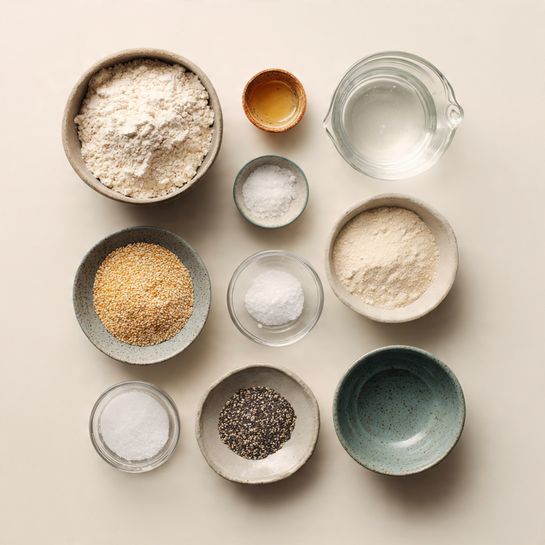
Ingredients in Homemade Bagels Recipe
Each ingredient plays a key role in achieving that perfect chewy texture and golden crust.
- Bread Flour: 4 cups. Provides the strong gluten structure needed for a chewy bagel.
- Instant Yeast: 2 1/4 teaspoons (1 packet). Helps the dough rise efficiently.
- Granulated Sugar: 2 tablespoons. Feeds the yeast and adds slight sweetness.
- Warm Water: 1 1/2 cups. Activates the yeast and hydrates the dough.
- Salt: 2 teaspoons. Balances flavor and strengthens the dough.
- Baking Soda (for boiling): 1 tablespoon. Enhances crust development during boiling.
- Toppings (optional): Sesame seeds, poppy seeds, everything seasoning, coarse salt.
Ingredient Substitutions
Don’t worry if you’re missing an ingredient. Here are some easy swaps:
Bread Flour: Use all-purpose flour, but expect a slightly less chewy texture.
Instant Yeast: Use active dry yeast, but let it proof in warm water first.
Sugar: Honey or maple syrup can be used for a more natural sweetness.
Toppings: Try dried onion flakes, shredded cheese, or cinnamon sugar for different flavor profiles.
Ingredient Spotlight
Bread Flour: The high protein content in bread flour gives bagels their iconic chewiness. It creates stronger gluten strands that hold their shape and texture during boiling and baking.
Baking Soda: When added to the boiling water, it raises the pH level, helping bagels brown better and develop that glossy, crisp crust.
Instructions for Making Homemade Bagels Recipe
Let’s roll up those sleeves. Here’s how to make real-deal bagels at home.
- Preheat Your Equipment:
Preheat your oven to 425°F (220°C). Line two baking sheets with parchment paper. - Combine Ingredients:
In a large bowl, mix together the bread flour, sugar, salt, and yeast. Add the warm water and stir until a shaggy dough forms. Knead for 8 to 10 minutes until smooth and elastic. - Prepare Your Cooking Vessel:
Transfer the dough to a lightly greased bowl, cover with plastic wrap, and let rise in a warm place for 1 to 1.5 hours, or until doubled in size. - Assemble the Dish:
Punch down the dough and divide into 8 equal pieces. Shape each into a ball, then poke a hole in the center and gently stretch into a bagel shape. Place shaped bagels on the prepared baking sheet. Cover and let rest for 10 minutes. - Cook to Perfection:
Bring a large pot of water to a boil and add the baking soda. Boil each bagel for 1 minute per side, then place back on the baking sheet. Add toppings immediately while still wet. - Finishing Touches:
Bake in the preheated oven for 20 to 25 minutes, or until golden brown. Rotate trays halfway through for even browning. - Serve and Enjoy:
Let cool on a wire rack for 10 minutes. Serve plain, toasted, or loaded with your favorite spreads and fillings.
Texture & Flavor Secrets
Homemade bagels have that irresistible contrast — a shiny, slightly crisp crust with a soft yet chewy interior. The boiling step helps lock in moisture and create a dense bite, while the long kneading process builds gluten for structure. Toppings not only add flavor but also texture, from crunchy seeds to coarse salt that crackles with each chew.
Cooking Tips & Tricks
These little details will elevate your bagels:
- Wet your hands slightly to shape sticky dough easily.
- Add toppings quickly after boiling for best adhesion.
- For sweet bagels, add cinnamon or dried fruit during the mixing stage.
- Don’t skip rotating the pans while baking — it ensures even browning.
What to Avoid
A few simple mistakes can make or break your bagels:
- Skipping the boil. Without it, you’ll just get round bread rolls.
- Under-kneading. Weak dough won’t hold its shape or texture.
- Overproofing. Your bagels may deflate during boiling if the dough rises too long.
- Not using enough flour. Sticky dough is tricky to shape, so adjust as needed.
Nutrition Facts
Servings: 8
Calories per serving: 290
Note: These are approximate values.
Preparation Time
Prep Time: 25 minutes
Cook Time: 25 minutes
Total Time: 2 hours (including rise and rest)
Make-Ahead and Storage Tips
Bagel dough can be made a day in advance and refrigerated overnight after shaping. Let come to room temperature while the oven preheats. Baked bagels store well in an airtight container for 3 days or can be frozen up to 2 months. Slice before freezing for easy toasting.
How to Serve Homemade Bagels Recipe
The options are endless. Try them with cream cheese and smoked salmon for a deli classic, or butter and jam for something simple. Turn them into breakfast sandwiches with eggs and cheese, or slice and toast for a crunchy snack. They also pair beautifully with soup or salads.
Creative Leftover Transformations
Don’t toss those day-old bagels — give them new life:
- Make bagel chips: Slice thin, brush with oil, and bake until crisp.
- Use in strata: Cube and bake into a savory breakfast casserole.
- DIY breadcrumbs: Pulse in a food processor and freeze.
Additional Tips
- Weigh your flour for accuracy and consistency.
- For smaller bagels, divide dough into 10 or 12 pieces.
- Add a bit of barley malt syrup to the boiling water for extra flavor and shine.
Make It a Showstopper
Want to impress? Try a bagel bar with a variety of spreads, toppings, and fresh veggies. Use a mix of seeds and sweet coatings for color contrast. Stack them on a tiered platter or rustic board for a bakery-style presentation.
Variations to Try
- Everything Bagels: A blend of sesame, poppy, garlic, onion, and salt.
- Cinnamon Raisin: Add cinnamon and soaked raisins to the dough.
- Asiago Cheese: Top with shredded cheese before baking.
- Sesame or Poppy: Keep it classic with a single seed topping.
- Jalapeño Cheddar: Mix chopped jalapeños into dough and top with cheese.
FAQ’s
Q1: Can I make these with all-purpose flour?
A1: Yes, but the texture will be softer and less chewy than with bread flour.
Q2: Can I skip the boiling step?
A2: It’s not recommended. Boiling is what makes a bagel a bagel.
Q3: How do I store leftover bagels?
A3: Keep them in an airtight container for 2 to 3 days, or freeze for longer storage.
Q4: Can I flavor the dough?
A4: Absolutely. Add herbs, spices, or sweet mix-ins like cinnamon or berries.
Q5: What if I don’t have parchment paper?
A5: Lightly grease the baking sheet instead, but parchment works best.
Q6: Why are my bagels flat?
A6: Likely from overproofing or under-kneading. Stick to the timing closely.
Q7: Can I double the recipe?
A7: Yes, just make sure you have room to boil and bake them in batches.
Q8: How do I get toppings to stick?
A8: Add them right after boiling while the surface is still wet.
Q9: Can I shape them differently?
A9: Sure, try mini bagels or even bagel knots for a twist.
Q10: Are they good without toppings?
A10: Definitely. The base dough is flavorful enough to enjoy plain or toasted.
Conclusion
Making homemade bagels might seem like a weekend-only adventure, but once you taste that chewy, fresh-baked goodness, you’ll never look back. Whether you like them classic or loaded with toppings, this recipe gives you the base to create your ideal bagel — warm, golden, and full of love from your kitchen.
PrintHomemade Bagels Recipe
These homemade bagels are chewy, golden, and full of classic flavor. With a simple dough and a quick boil before baking, you can create bakery-style bagels right in your own kitchen. Perfect for breakfast, brunch, or anytime snacking.
Ingredients
- 4 cups bread flour
- 2 1/4 teaspoons instant yeast (1 packet)
- 2 tablespoons granulated sugar
- 1 1/2 cups warm water
- 2 teaspoons salt
- 1 tablespoon baking soda (for boiling)
- Optional toppings: sesame seeds, poppy seeds, everything seasoning, coarse salt
Instructions
- Preheat oven to 425°F (220°C) and line two baking sheets with parchment paper.
- In a large bowl, mix bread flour, sugar, salt, and yeast. Add warm water and mix until dough forms. Knead for 8–10 minutes until smooth and elastic.
- Place dough in a greased bowl, cover, and let rise for 1–1.5 hours until doubled.
- Punch down dough and divide into 8 equal pieces. Shape into balls, then poke a hole in the center and stretch into bagel shapes. Rest for 10 minutes.
- Bring a large pot of water to boil and add baking soda. Boil each bagel for 1 minute per side, then transfer to prepared baking sheets.
- Sprinkle toppings onto wet bagels immediately after boiling.
- Bake for 20–25 minutes until golden brown, rotating trays halfway through.
- Cool on wire racks and serve warm or toasted.
Notes
- Use bread flour for the best chewy texture.
- Boiling before baking is essential for a shiny crust and dense crumb.
- Top bagels right after boiling while still wet for best adhesion.
- Dough can be refrigerated overnight after shaping.