Bibimbap
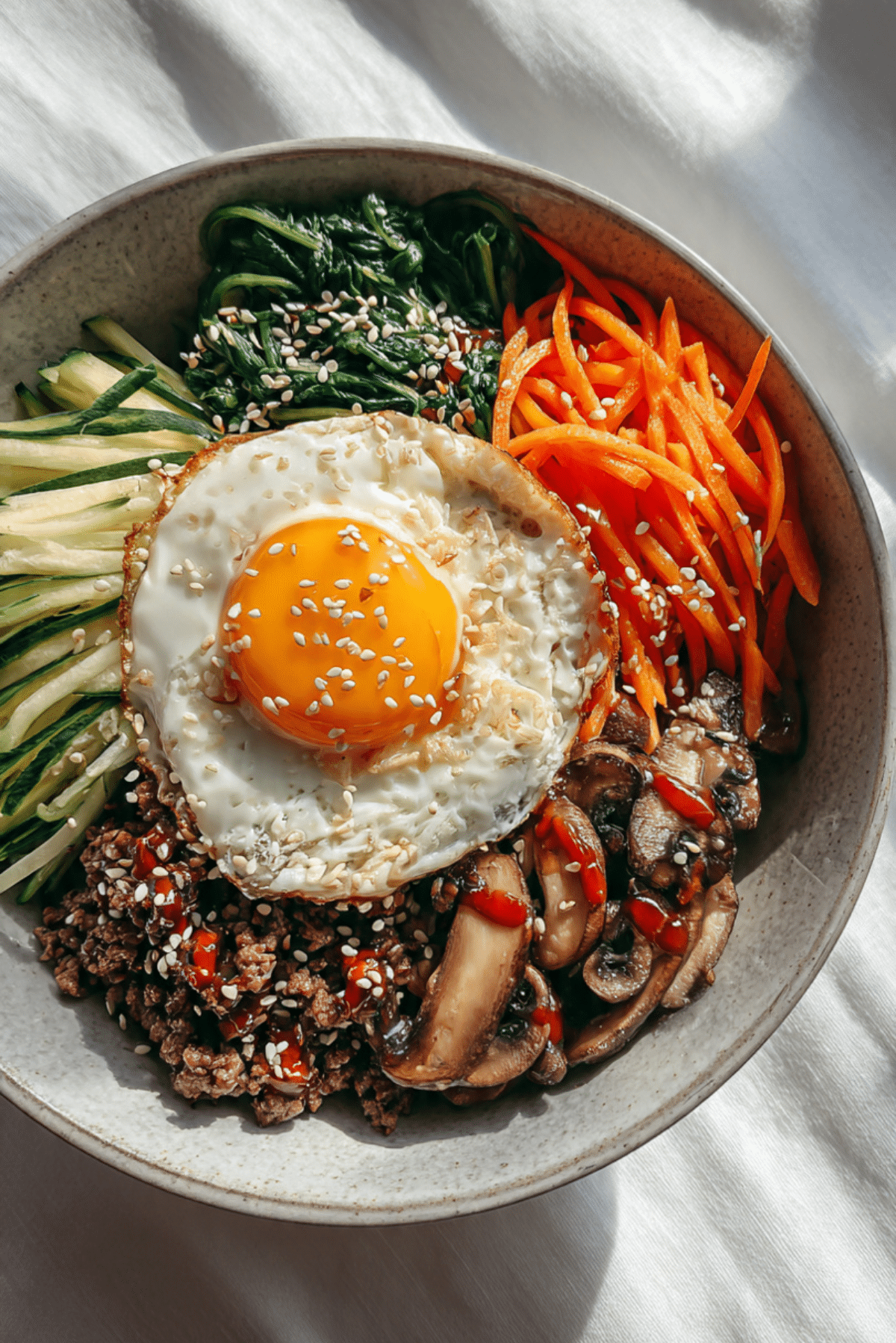
There’s something undeniably joyful about mixing together a bowl of Bibimbap. With its rainbow of sautéed vegetables, tender beef, sticky rice, and that golden yolk waiting to be broken over everything, each bite is a beautiful mess of flavor and texture. The spicy kick from gochujang, the nutty aroma of sesame oil, and the comforting warmth of the rice all come together in the kind of harmony that makes you close your eyes and savor it. This is more than a meal — it’s a sensory experience, a tradition, and a satisfying ritual all in one bowl.
Behind the Recipe
Bibimbap is one of those dishes that holds a special place in many hearts. For me, it brings back memories of late-night cravings and cozy evenings, seated cross-legged on the floor with friends, each of us mixing our bowls to our own liking. There’s a kind of magic in the way all the components are kept separate and beautifully arranged — and then, with one satisfying stir, they become a flavorful masterpiece. It’s a dish that welcomes creativity, comfort, and connection, no matter where or when you eat it.
Recipe Origin or Trivia
The word “Bibimbap” literally means “mixed rice” in Korean, and its origins trace back centuries to the late 19th century or earlier. Traditionally, it was eaten on the eve of the Lunar New Year as a way to use up leftover side dishes, known as banchan. The beauty of Bibimbap lies in its balance — each ingredient contributes something unique, and together they reflect the Korean principles of harmony and health. Over time, it evolved from a humble home meal to a globally beloved dish that showcases the elegance of Korean cuisine.
Why You’ll Love Bibimbap
There’s so much to adore about Bibimbap — let’s break it down:
Versatile: You can switch up the proteins, veggies, or even go vegetarian. It’s endlessly adaptable.
Budget-Friendly: Most of the ingredients are pantry staples or easy to find, making it affordable without sacrificing flavor.
Quick and Easy: While it looks fancy, prep is straightforward, especially if you multitask the cooking.
Customizable: Add more spice, go meatless, or make it with brown rice — the bowl is yours to build.
Crowd-Pleasing: It’s a showstopper at the table. Everyone gets their own bowl to mix and match.
Make-Ahead Friendly: Prep the veggies and sauces ahead of time for easy assembly later.
Great for Leftovers: Have some extra cooked rice or roasted veggies? Throw them in and call it a day.
Chef’s Pro Tips for Perfect Results
The secret to a great Bibimbap is in the details. Here’s how to make yours unforgettable:
- Use freshly cooked short-grain rice so it’s sticky enough to hold the flavors.
- Sauté veggies separately to preserve their individual textures and colors.
- Don’t skip sesame oil — it adds that warm, nutty depth that ties it all together.
- Get that egg yolk runny — it’s like liquid gold when mixed in with the rice.
- Serve hot so the gochujang melts beautifully into everything with each stir.
Kitchen Tools You’ll Need
Nothing fancy required — just the basics to make the magic happen.
Wok or Skillet: For sautéing each vegetable quickly and evenly.
Rice Cooker or Pot: To cook the rice to fluffy, sticky perfection.
Small Bowls: For organizing and prepping each topping separately.
Mixing Spoon: Because the real joy begins when you stir it all together.
Serving Bowls: Wide, shallow bowls work best to show off all the ingredients.
Ingredients in Bibimbap
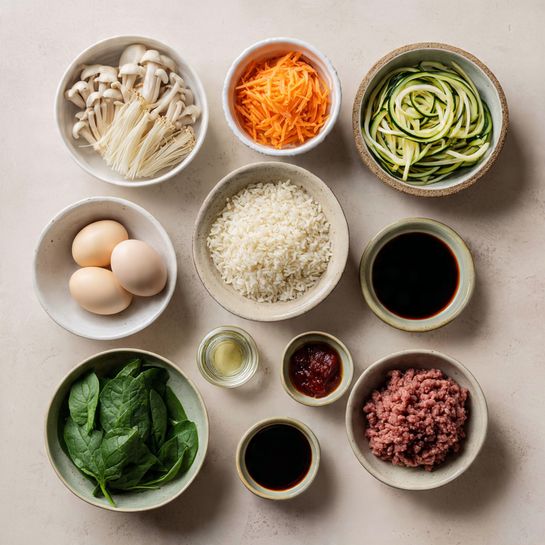
Bibimbap is all about colorful variety and balance. Here’s what you’ll need for a classic version:
- Short-Grain White Rice: 2 cups, cooked — the base that holds everything together.
- Carrot: 1, julienned — brings a sweet, crunchy texture.
- Zucchini: 1 small, julienned — adds moisture and mild flavor.
- Spinach: 2 cups — quickly blanched and seasoned, it brings a soft, earthy note.
- Bean Sprouts: 1 cup — blanched and lightly seasoned, they add a fresh crunch.
- Shiitake Mushrooms: 1 cup, sliced — umami-rich and chewy for savory depth.
- Ground Beef: 1/2 pound — seasoned and sautéed for hearty protein.
- Eggs: 2, sunny-side up — creamy yolks tie everything together.
- Garlic: 2 cloves, minced — for seasoning the veggies and beef.
- Sesame Oil: 2 tablespoons — the finishing touch for aroma and richness.
- Soy Sauce: 2 tablespoons — brings out the umami in veggies and beef.
- Gochujang (Korean Chili Paste): 2 tablespoons — spicy, tangy, and slightly sweet, it’s the heart of the flavor.
Ingredient Substitutions
Don’t worry if you’re missing something — here’s how to swap smartly:
Short-Grain Rice: Use brown rice or cauliflower rice for a lighter option.
Ground Beef: Try ground chicken, tofu, or tempeh for a meatless version.
Shiitake Mushrooms: Any mushroom will work — button or cremini are great too.
Gochujang: Mix sriracha with a little miso paste if you can’t find it.
Soy Sauce: Coconut aminos or tamari are great gluten-free alternatives.
Ingredient Spotlight
Gochujang: This fermented Korean chili paste brings a mix of heat, sweetness, and umami that’s unlike anything else. It’s bold but balanced and totally essential to Bibimbap.
Sesame Oil: Just a drizzle adds deep, nutty richness. It’s one of those flavors that instantly makes a dish feel more comforting and complete.
Instructions for Making Bibimbap
There’s a bit of prep involved, but once you get going, it comes together beautifully. Here’s how we build the bowl:
- Preheat Your Equipment:
Heat a skillet or wok over medium heat and get your rice cooking if it’s not already done. - Combine Ingredients:
Season each veggie separately. Sauté carrots, zucchini, mushrooms, and spinach each with a bit of oil, garlic, and soy sauce. Blanch bean sprouts in boiling water, then season with sesame oil and salt. Set each aside in its own bowl. - Prepare Your Cooking Vessel:
In the same skillet, brown the ground beef with garlic, soy sauce, and a dash of sesame oil until fully cooked. Set aside. - Assemble the Dish:
Spoon hot rice into each bowl. Arrange each vegetable in its own little section around the rice. Add the cooked beef in one section. - Cook to Perfection:
Fry the eggs sunny-side up, keeping the yolks runny. Gently place one egg in the center of each bowl. - Finishing Touches:
Drizzle sesame oil over the top. Add a generous spoonful of gochujang right in the middle. - Serve and Enjoy:
Serve immediately. Let everyone mix up their bowl right before eating — it’s part of the experience!
Texture & Flavor Secrets
Bibimbap is all about contrast. You’ve got tender rice, crisp vegetables, chewy mushrooms, juicy beef, and that creamy egg. Then the gochujang adds a bold, spicy-sweet punch, while sesame oil lingers in every bite. The more you stir, the better it gets — every texture plays off another.
Cooking Tips & Tricks
Here’s how to keep your Bibimbap bowl top-tier:
- Always prep everything before assembly so nothing gets cold.
- Don’t overcook the egg yolk — it’s the silky glue of the bowl.
- Use sesame oil at the end, not for sautéing, to keep its flavor fresh.
- If serving to guests, prep bowls ahead and just fry eggs to order.
What to Avoid
Avoid these common pitfalls to keep your Bibimbap experience smooth and satisfying:
- Overcrowding the skillet — sauté each veggie separately to avoid mush.
- Skipping gochujang — it’s the star, not just a garnish.
- Serving cold rice — warm rice is crucial for mixing and flavor.
Nutrition Facts
Servings: 2
Calories per serving: 640
Note: These are approximate values.
Preparation Time
Prep Time: 25 minutes
Cook Time: 20 minutes
Total Time: 45 minutes
Make-Ahead and Storage Tips
Bibimbap is excellent for prep-ahead meals. You can cook all the toppings and store them in containers for up to 3 days in the fridge. Just reheat the rice and toppings, fry a fresh egg, and assemble when ready to eat. The gochujang and sesame oil can be kept at room temp.
How to Serve Bibimbap
Serve it in wide bowls for easy mixing. Add extra sesame seeds or a sprinkle of scallions for brightness. Pair it with a light miso soup or a cucumber salad to round out the meal.
Creative Leftover Transformations
Got leftovers? Here’s how to make them exciting again:
- Wrap the mix in seaweed sheets for easy Bibimbap sushi rolls.
- Turn it into a fried rice by tossing everything in a hot wok.
- Use the toppings in a Korean-style quesadilla with cheese and tortillas.
Additional Tips
- Keep a small bowl of water nearby while cooking — it helps manage sticky rice.
- For extra crunch, add pickled radish or kimchi on the side.
- Gochujang can be thinned with a bit of vinegar for a lighter drizzle.
Make It a Showstopper
Presentation is everything with Bibimbap. Arrange the toppings in vibrant, separate sections on top of the rice and place the egg right in the center. Use a large, flat bowl so everything is visible and tempting. A sprinkle of sesame seeds adds that final sparkle.
Variations to Try
- Vegetarian Bibimbap: Swap beef for tofu or extra mushrooms.
- Spicy Tuna Bibimbap: Add seared or raw tuna tossed in spicy mayo.
- Kimchi Bibimbap: Mix in sautéed kimchi for an extra punch.
- Brown Rice Bibimbap: Use nutty brown rice for added fiber and chew.
- Bibimbap with Chicken Bulgogi: Try thinly sliced marinated chicken instead of beef.
FAQ’s
Q1: Can I make Bibimbap without meat?
Yes, just double up on the vegetables or add tofu for protein.
Q2: What’s the best rice for Bibimbap?
Short-grain white rice works best because of its sticky texture.
Q3: Is gochujang very spicy?
It has a gentle heat that’s balanced with sweetness and umami — not overpowering.
Q4: Can I meal prep Bibimbap?
Absolutely. Just keep the rice and toppings stored separately until assembly.
Q5: What’s a good side dish for Bibimbap?
Kimchi, miso soup, or a light cucumber salad pair beautifully.
Q6: Can I use a fried egg instead of sunny-side up?
Sure! As long as the yolk stays runny, you’re good to go.
Q7: How long does Bibimbap last in the fridge?
Up to 3 days when stored in separate containers.
Q8: Can I use frozen vegetables?
Yes, but make sure to thaw and drain them well to avoid sogginess.
Q9: What’s a gluten-free alternative to soy sauce?
Tamari or coconut aminos are great substitutes.
Q10: Is Bibimbap traditionally vegetarian?
Not always, but vegetarian versions are very common and just as delicious.
Conclusion
Bibimbap is one of those rare dishes that feels both everyday and extraordinary. It’s colorful, comforting, and endlessly satisfying. Whether you’re making it for a cozy solo dinner or serving it to impress guests, this Korean classic never fails to hit the spot. Trust me, once you get into the rhythm of prepping and building your bowl, it’s going to become a staple you’ll crave over and over again.
PrintBibimbap
A colorful and flavorful Korean rice bowl layered with sautéed vegetables, seasoned beef, and a perfectly fried egg, finished with spicy gochujang and nutty sesame oil.
- Prep Time: 25 minutes
- Cook Time: 20 minutes
- Total Time: 45 minutes
- Yield: 2 servings
- Category: Main Course
- Method: Sautéing
- Cuisine: Korean
- Diet: Low Lactose
Ingredients
- 2 cups short-grain white rice, cooked
- 1 carrot, julienned
- 1 small zucchini, julienned
- 2 cups spinach
- 1 cup bean sprouts
- 1 cup shiitake mushrooms, sliced
- 1/2 pound ground beef
- 2 eggs, sunny-side up
- 2 cloves garlic, minced
- 2 tablespoons sesame oil
- 2 tablespoons soy sauce
- 2 tablespoons gochujang (Korean chili paste)
Instructions
- Heat a skillet or wok over medium heat and cook the rice if not already prepared.
- Sauté each vegetable separately with a bit of garlic, soy sauce, and oil, setting each aside.
- Blanch bean sprouts, then season with sesame oil and salt.
- In the skillet, cook ground beef with garlic, soy sauce, and sesame oil until browned. Set aside.
- Assemble bowls by placing rice in the center and arranging vegetables and beef in sections around it.
- Fry eggs sunny-side up and place one on top of each bowl.
- Drizzle sesame oil and add a spoonful of gochujang on top.
- Serve hot and mix everything together before eating.
Notes
- Prep all toppings in advance for quick assembly.
- Adjust spice level by using more or less gochujang.
- For vegetarian version, replace beef with tofu or more mushrooms.
- Leftover rice and toppings make great next-day fried rice.
Nutrition
- Serving Size: 1 bowl
- Calories: 640
- Sugar: 6g
- Sodium: 780mg
- Fat: 24g
- Saturated Fat: 6g
- Unsaturated Fat: 16g
- Trans Fat: 0g
- Carbohydrates: 75g
- Fiber: 6g
- Protein: 28g
- Cholesterol: 190mg